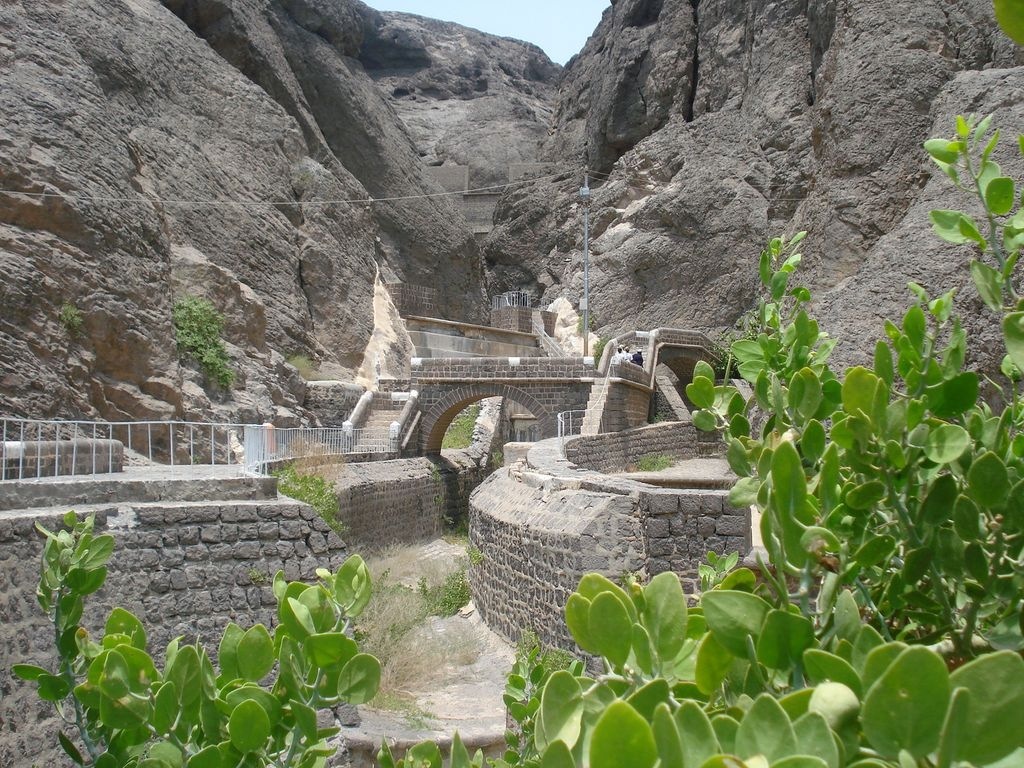
The Arab League Educational, Cultural and Scientific Organization (ALECSO) has inscribed the historic cisterns of Aden in Aden Governorate, southern Yemen, on the Arab Architectural and Urban Heritage List. This announcement came during the tenth meeting of ALECSO’s Architectural and Urban Heritage Observatory, held in Beirut, Lebanon.
Hafizah Al-Sheikh, Secretary-General of the Yemeni Committee for Education, Culture and Science, said that the inclusion of the Aden cisterns on the heritage list represents the result of joint cooperation between the Yemeni Committee, the Antiquities and Museums Authority, and the authorities concerned with the preservation of historic cities in Aden. She emphasized that this achievement reflects the importance of preserving historical monuments that represent an integral part of Yemen’s cultural and architectural identity.
The Aden cisterns are located on the slopes of the mountains surrounding the Crater area in Old Aden, at the mouth of Wadi Al-Tawila on the western side of the city. The neighborhood derives its name from these historic cisterns. Researchers have estimated the number of these cisterns at approximately 55 in the past, while only 18 remain in use today, capable of holding approximately 20 million gallons of water.
These cisterns are distinguished by their connection to ancient irrigation and watering networks, including internal canals and drains distributed throughout various areas of the city and surrounding farms. The cisterns are considered ancient water structures, likely constructed before Christ, according to historical references, making them one of the oldest architectural water systems in the region.
Despite their historical importance, the cisterns have been subject to significant neglect over the years due to the modernization of Aden’s water networks and its reliance on other sources, such as groundwater wells. This has led to clogged canals and disrupted drains, diminishing the cisterns’ role as a primary source of water.
However, recent years have seen increased interest from local authorities in Aden in rehabilitating and periodically maintaining these cisterns. Current efforts focus on preserving their role in protecting the residential neighborhoods below them from the risks of seasonal floods and torrents, while also highlighting their historical and architectural value.
The cisterns of Aden are one of Yemen’s most prominent archaeological landmarks and represent a unique example of ancient water collection and storage techniques in a mountainous environment, adding an important dimension to understanding the city’s urban and environmental heritage.