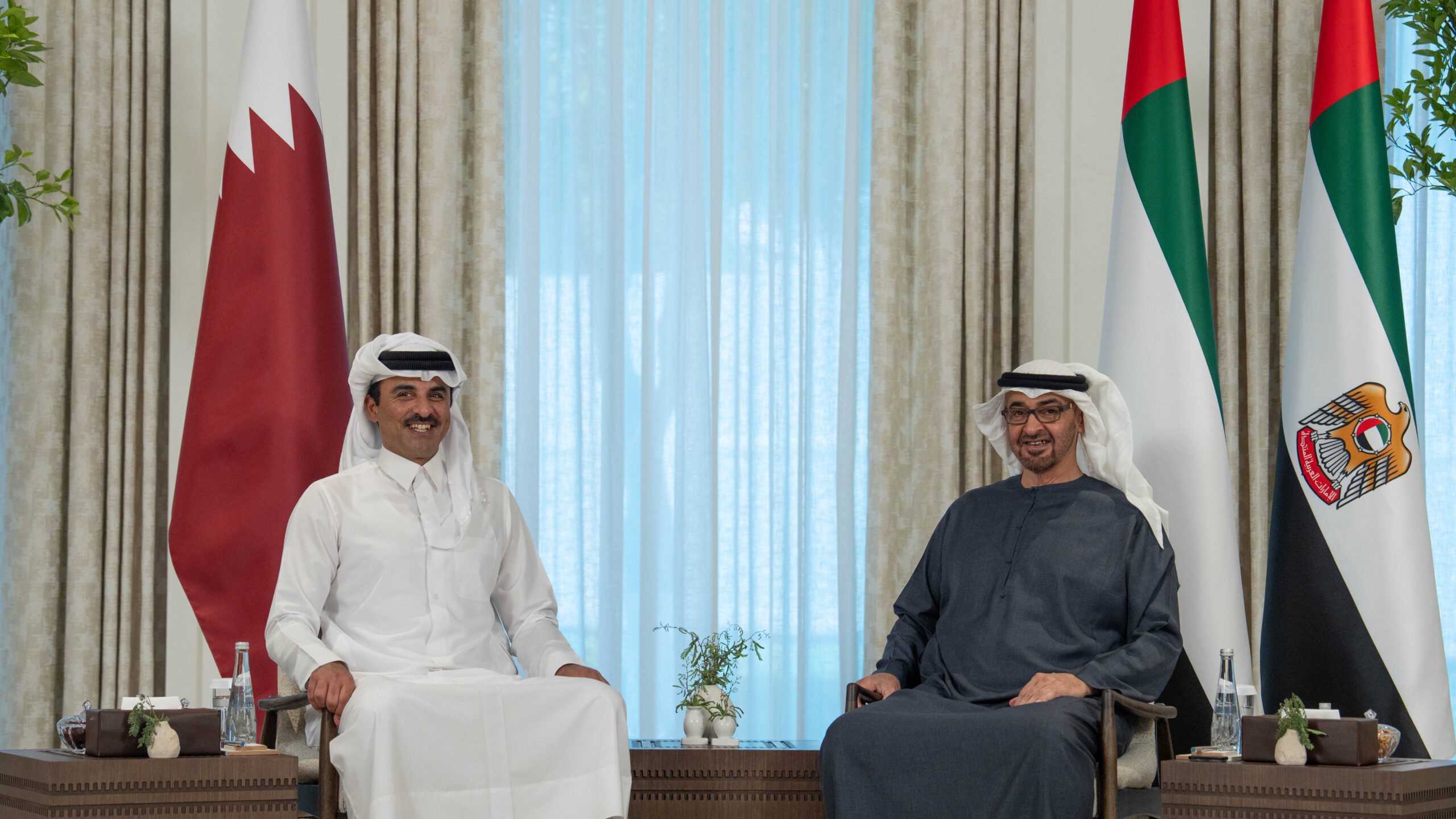
On Sunday, the Emir of Qatar, Sheikh Tamim bin Hamad Al Thani, held official talks with the President of the United Arab Emirates, Sheikh Mohammed bin Zayed Al Nahyan, during an official visit to Abu Dhabi. The meeting addressed a range of regional and international issues.
According to a statement from the Qatari Emiri Diwan, the meeting took place at the “Qasr Al Shati” (Beach Palace) in Abu Dhabi and focused on “discussing the close brotherly relations between the two countries and ways to support and develop them in various fields to serve the common interests of Qatar and the UAE and their peoples.”
Both sides also discussed “recent developments in the region,” particularly the ongoing crises in the Middle East, foremost the Palestinian issue and the situation in Gaza, alongside other topics of mutual interest.
The meeting was attended by several senior Qatari officials, including Sheikh Mohammed bin Abdulrahman Al Thani, Prime Minister and Minister of Foreign Affairs; Sheikh Khalifa bin Hamad bin Khalifa Al Thani, Minister of Interior; and Abdullah bin Mohammed Al Khulaifi, Head of the Emiri Diwan, along with other members of the Emir’s official delegation.
The UAE President hosted an official luncheon in honor of the Qatari Emir, underscoring the formal nature and significance of the visit for bilateral relations.
The meeting occurs amid heightened diplomatic activity in the region, as tensions persist in several regional conflicts, particularly regarding the Palestinian issue, which has been a recurring topic in previous discussions between the two leaders. Those talks addressed developments in Gaza, efforts to end military escalation, protect civilians, and pursue a comprehensive and sustainable ceasefire.
The visit signals a rapprochement between the two nations after years of distance, indicating a political realignment aimed at closer coordination on regional and international issues, especially in light of the security and economic challenges facing the Gulf region.
Observers view the meeting as a further step toward strengthening political dialogue between Doha and Abu Dhabi, paving the way for enhanced cooperation on regional issues, including developments in Yemen, relations with Iran, and stability in the Middle East.
Given the complex geopolitical landscape, both Qatar and the UAE are showing growing interest in realigning their foreign policy priorities in line with evolving geopolitical realities, seeking common ground to address existing challenges.