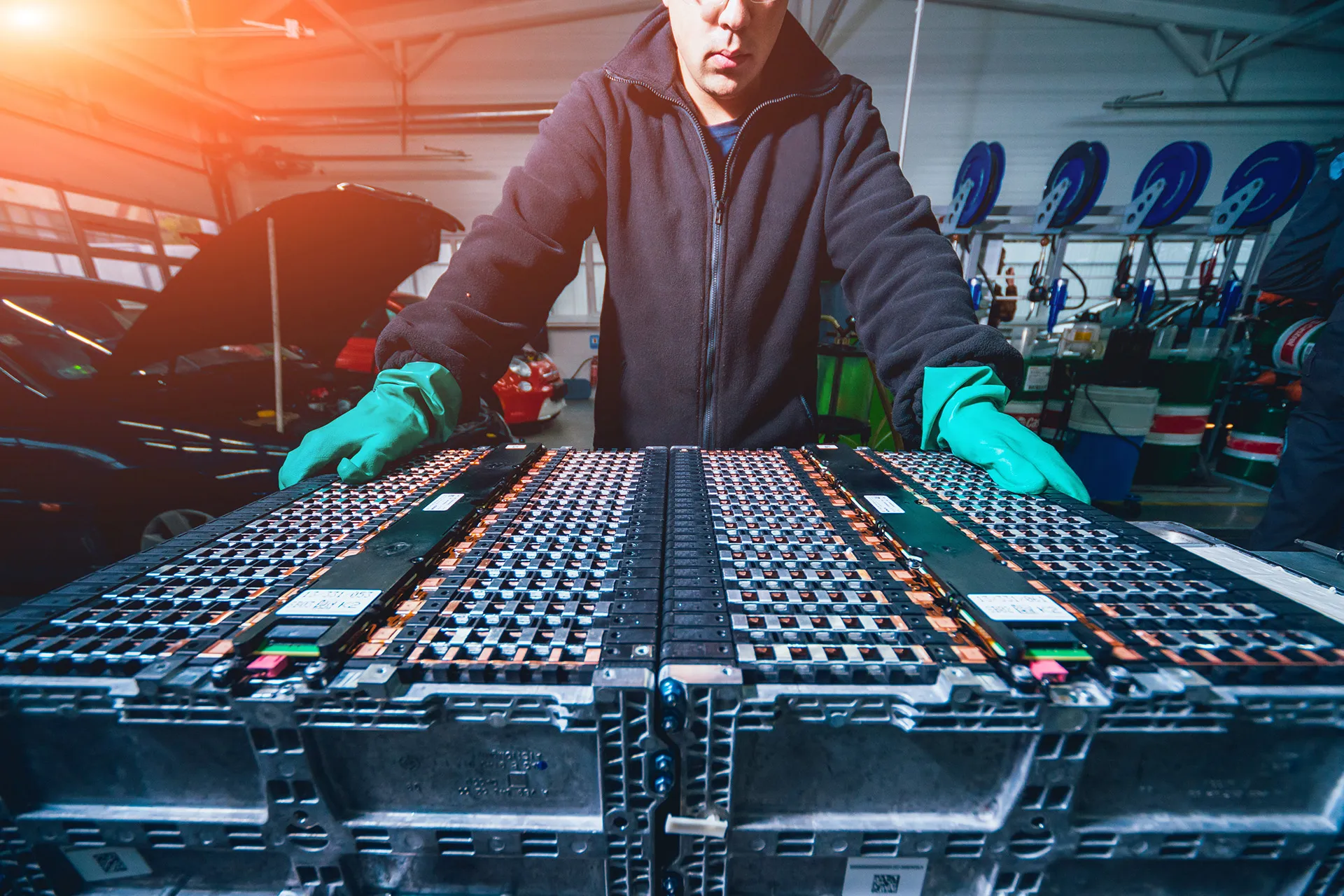
The China-Morocco company COPCO inaugurated Morocco’s first factory of its kind to produce lithium-ion battery components used in electric vehicles, marking a strategic step aimed at strengthening the Kingdom’s position as a major industrial hub in clean energy and the global electric vehicle manufacturing industry.
The new factory is located in the Jorf Lasfar industrial zone, approximately 125 kilometers south of Casablanca. The COPCO project is the result of a partnership between the Moroccan investment fund Al Mada, one of the leading investment funds in the Kingdom, and the Chinese company CNGR, a global leader in battery component production and advanced material technologies.
According to a statement issued by the company and cited by Agence France-Presse (AFP), the total investment directed toward the project amounts to approximately €1.9 billion (around USD 2.2 billion). The factory’s maximum production capacity is expected to reach about 70 gigawatts annually, sufficient to equip nearly one million electric vehicles each year. This represents a qualitative addition to Morocco’s automotive industry, which is seeking to adapt to the global shift toward environmentally friendly vehicles.
The factory will provide around 1,800 direct high-skilled jobs in fields such as engineering, chemistry, and advanced manufacturing, in addition to approximately 1,800 indirect jobs in supply chains, logistics, technical support, and maintenance. This will enhance economic development in the Jorf Lasfar area and create significant local added value.
In its initial phase, the factory is scheduled to produce primary cathode materials based on nickel, manganese, and cobalt—essential components used in the manufacture of electric vehicle batteries and stationary energy storage systems. The project aims to achieve an annual production of 120,000 tons of these materials, alongside 60,000 tons per year of lithium iron phosphate cathode material, ensuring a diversified product range to meet the needs of various markets and manufacturers worldwide.
In subsequent phases, COPCO plans to add advanced industrial units within the complex to recycle spent batteries by processing the “black mass” extracted from expired batteries, with a processing capacity exceeding 60,000 tons annually. Additionally, units for refining strategic metals will be established, supporting Morocco’s shift toward a circular economy and highly efficient resource utilization.
This project aligns with the Kingdom’s efforts to localize the production of electric vehicle battery components and strengthen its competitiveness in this rapidly growing sector, alongside Morocco’s leading position in phosphate production. Morocco controls about 31% of the global phosphate market, according to data from the OCP Group (Office Chérifien des Phosphates).
Furthermore, the project fits within Morocco’s renewable energy strategy, where clean energy currently accounts for approximately 38% of the country’s total electricity production, with an ambitious target of reaching 52% by 2030. This positions Morocco among the regional frontrunners in the transition toward a sustainable green economy.