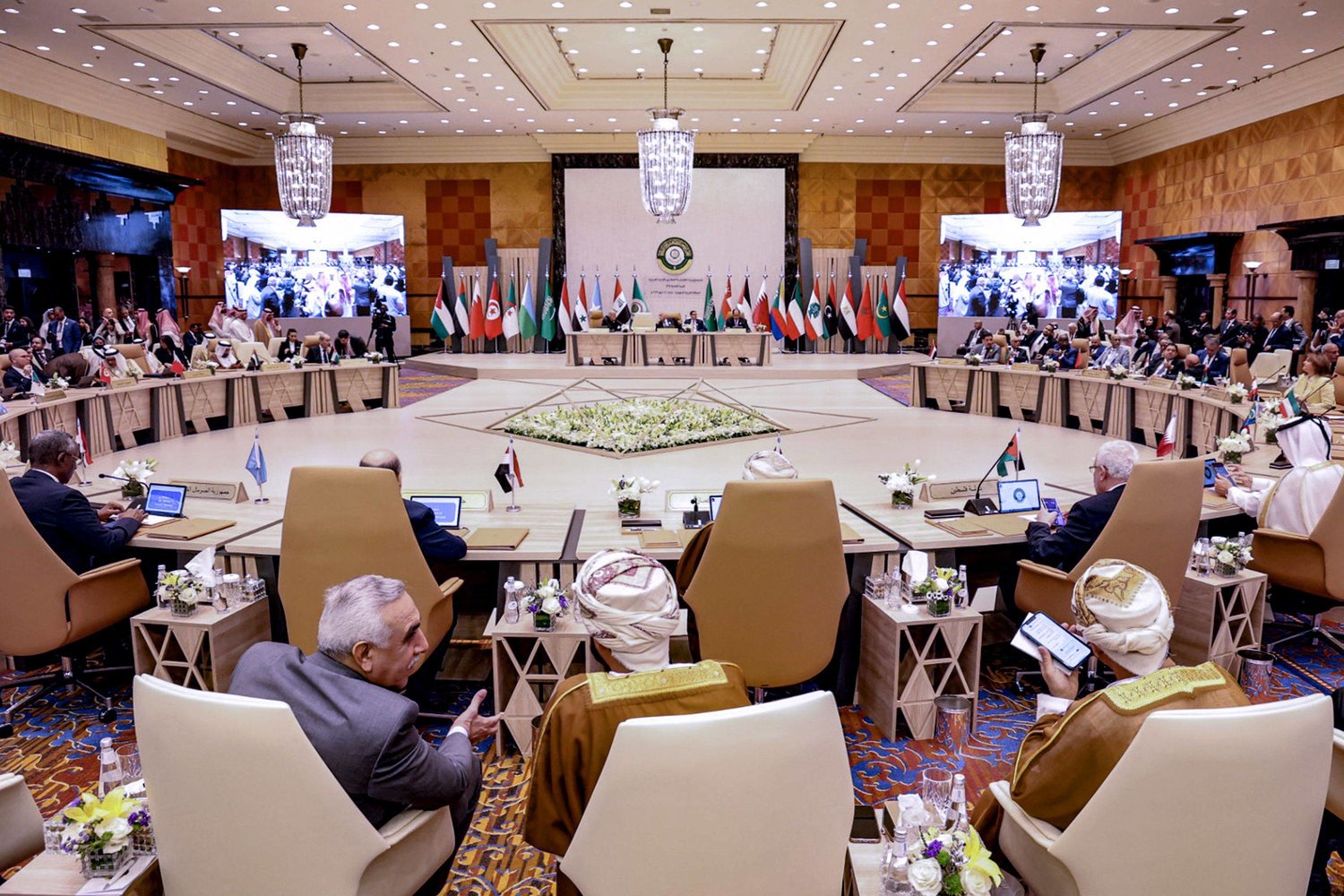
The 34th Arab Summit concluded in the Iraqi capital, Baghdad, under the theme “Dialogue, Solidarity, and Development,” with the participation of leaders, heads of state, and representatives of Arab countries. The final declaration of the summit focused on developments in the Palestinian territories, Syria, Sudan, and other regional issues.
Regarding the Palestinian issue, the declaration called on the international community to intervene urgently to stop the escalation in the Gaza Strip and to provide humanitarian aid. All forms of displacement and forced relocation of Palestinians were firmly rejected. The Arab leaders reaffirmed the central importance of the Palestinian cause and their full support for the legitimate rights of the Palestinian people. They emphasized the need to open border crossings for the delivery of aid and to allow international organizations to carry out their duties.
With regard to Syria, the declaration condemned the repeated “Israeli attacks on Syrian territory” and called for the resumption of a comprehensive political process that guarantees Syria’s unity and sovereignty. In this context, the participants welcomed the U.S. announcement to lift some sanctions imposed on Damascus and stressed that economic sanctions hinder reconstruction efforts.
On the Sudan crisis, the declaration stressed the need for a political solution to end the conflict, emphasizing the importance of respecting Sudan’s sovereignty and territorial integrity. All foreign interference in the country’s internal affairs was rejected. The Arab leaders reaffirmed their support for Sudan’s national institutions.
Concerning Lebanon, the declaration expressed support for preserving security and stability in the country and called for adherence to relevant Security Council resolutions. The participants also renewed their support for the Yemeni government and the Presidential Leadership Council, as well as for all regional and international efforts to achieve a comprehensive political solution in Yemen.
In terms of international relations, the summit supported dialogue efforts between Iran and the United States concerning Iran’s nuclear program, expressing hope for positive outcomes.
The summit’s opening session included several speeches, including that of Iraqi Prime Minister Mohammed Shia’ Al-Sudani, who called for active Arab efforts to end the violence in Gaza, emphasized Sudan’s unity, and welcomed Syria’s return to the Arab League. Qatar’s Emir, Sheikh Tamim bin Hamad Al Thani, expressed via the platform X his hope that the outcomes of the summit would strengthen Arab solidarity:
“We have gathered today in Baghdad for the 34th Arab Summit – in a regional and international context that calls for Arab and international cooperation to resolve its crises.”
He added: “We hope that the resolutions of the summit will contribute to strengthening our Arab solidarity and consolidating cooperation in all fields.”
Egyptian President Abdel Fattah Al-Sisi spoke of the need for a ceasefire in Gaza and Sudan and called for an international conference for the reconstruction of the Gaza Strip.
Palestinian President Mahmoud Abbas also called for an international conference in Cairo to rebuild Gaza and demanded that the factions in the Gaza Strip hand over their weapons to the Palestinian Authority.
The summit marked the official return of Syria, with the Syrian foreign minister expressing his government’s desire to end its isolation and re-engage with the Arab world. The Lebanese representative reaffirmed the country’s commitment to implementing UN Resolution 1701 and called for Israel’s withdrawal from Lebanese territory.
The speeches of the leaders and officials unanimously emphasized the importance of strengthening Arab cooperation in light of the current regional challenges.